
1.1M
Downloads
631
Episodes
Search for Truth Radio Programmes hosted by Brian Johnston and John Martin from the Churches of God (www.churchesofgod.info), an evangelical organization with around 150 churches worldwide.
Episodes
Feb 16, 2021
Feb 16, 2021
15 min
On a few occasions in the New Testament, the Apostle Paul urges his readers not to lose heart. In particular, he appeals that they don’t lose heart in evangelism. This appeal can be found – twice in fact - in 2 Corinthians 4. If we’re in the western world today, it’s not hard to appreciate why he had this concern. Paul encountered in certain places the same stony indifference we can come up against, ranging even to outright hostility at times. We can all too readily identify the same features in society around us that the Apostle Paul diagnoses in the Greco-Roman world of the first century AD (Romans 1). Drawing from Paul’s writings, Bible teacher and broadcaster Brian Johnston provides a number of tools and also some encouragement in preaching the gospel in modern society.
Feb 9, 2021
Feb 9, 2021
15 min
On a few occasions in the New Testament, the Apostle Paul urges his readers not to lose heart. In particular, he appeals that they don’t lose heart in evangelism. This appeal can be found – twice in fact - in 2 Corinthians 4. If we’re in the western world today, it’s not hard to appreciate why he had this concern. Paul encountered in certain places the same stony indifference we can come up against, ranging even to outright hostility at times. We can all too readily identify the same features in society around us that the Apostle Paul diagnoses in the Greco-Roman world of the first century AD (Romans 1). Drawing from Paul’s writings, Bible teacher and broadcaster Brian Johnston provides a number of tools and also some encouragement in preaching the gospel in modern society.
Feb 2, 2021
Feb 2, 2021
15 min
The consideration of whether it could be true that everything is meaningless is not a consideration we expect to find arising from within a biblical worldview, where God is accepted as existing and giving meaning and purpose to human existence. But the curious thing – at least at first sight – is that one entire book in the Bible is devoted to exploring whether or not everything is meaningless. Why should this be the case? Bible teacher and broadcaster Brian Johnston gives the answer.
Jan 26, 2021
Jan 26, 2021
15 min
The consideration of whether it could be true that everything is meaningless is not a consideration we expect to find arising from within a biblical worldview, where God is accepted as existing and giving meaning and purpose to human existence. But the curious thing – at least at first sight – is that one entire book in the Bible is devoted to exploring whether or not everything is meaningless. Why should this be the case? Bible teacher and broadcaster Brian Johnston gives the answer.
Jan 19, 2021
Jan 19, 2021
15 min
The consideration of whether it could be true that everything is meaningless is not a consideration we expect to find arising from within a biblical worldview, where God is accepted as existing and giving meaning and purpose to human existence. But the curious thing – at least at first sight – is that one entire book in the Bible is devoted to exploring whether or not everything is meaningless. Why should this be the case? Bible teacher and broadcaster Brian Johnston gives the answer.
Jan 12, 2021
Jan 12, 2021
15 min
The consideration of whether it could be true that everything is meaningless is not a consideration we expect to find arising from within a biblical worldview, where God is accepted as existing and giving meaning and purpose to human existence. But the curious thing – at least at first sight – is that one entire book in the Bible is devoted to exploring whether or not everything is meaningless. Why should this be the case? Bible teacher and broadcaster Brian Johnston gives the answer.
Jan 5, 2021
Dec 29, 2020
Dec 29, 2020
15 min
The consideration of whether it could be true that everything is meaningless is not a consideration we expect to find arising from within a biblical worldview, where God is accepted as existing and giving meaning and purpose to human existence. But the curious thing – at least at first sight – is that one entire book in the Bible is devoted to exploring whether or not everything is meaningless. Why should this be the case? Bible teacher and broadcaster Brian Johnston gives the answer.
Dec 22, 2020
Dec 22, 2020
15 min
The consideration of whether it could be true that everything is meaningless is not a consideration we expect to find arising from within a biblical worldview, where God is accepted as existing and giving meaning and purpose to human existence. But the curious thing – at least at first sight – is that one entire book in the Bible is devoted to exploring whether or not everything is meaningless. Why should this be the case? Bible teacher and broadcaster Brian Johnston gives the answer.
Dec 15, 2020
Dec 15, 2020
15 min
The consideration of whether it could be true that everything is meaningless is not a consideration we expect to find arising from within a biblical worldview, where God is accepted as existing and giving meaning and purpose to human existence. But the curious thing – at least at first sight – is that one entire book in the Bible is devoted to exploring whether or not everything is meaningless. Why should this be the case? Bible teacher and broadcaster Brian Johnston gives the answer.
Dec 8, 2020
Dec 8, 2020
15 min
The consideration of whether it could be true that everything is meaningless is not a consideration we expect to find arising from within a biblical worldview, where God is accepted as existing and giving meaning and purpose to human existence. But the curious thing – at least at first sight – is that one entire book in the Bible is devoted to exploring whether or not everything is meaningless. Why should this be the case? Bible teacher and broadcaster Brian Johnston gives the answer.
Nov 5, 2020
Nov 5, 2020
14 min
Brian Johnston takes a practical look at family life through the lens of Joseph's experiences in the various 'homes' that he found himself in, and also explores how the apostle Paul's close relationship with the Church of God in Thessalonika resembles a parental one.
Oct 29, 2020
Oct 29, 2020
15 min
Brian Johnston takes a practical look at family life through the lens of Joseph's experiences in the various 'homes' that he found himself in, and also explores how the apostle Paul's close relationship with the Church of God in Thessalonika resembles a parental one.
Oct 22, 2020
Oct 22, 2020
15 min
Brian Johnston takes a practical look at family life through the lens of Joseph's experiences in the various 'homes' that he found himself in, and also explores how the apostle Paul's close relationship with the Church of God in Thessalonika resembles a parental one.
Oct 15, 2020
Oct 15, 2020
15 min
Brian Johnston takes a practical look at family life through the lens of Joseph's experiences in the various 'homes' that he found himself in, and also explores how the apostle Paul's close relationship with the Church of God in Thessalonika resembles a parental one.
Oct 8, 2020
Oct 8, 2020
15 min
Brian Johnston takes a practical look at family life through the lens of Joseph's experiences in the various 'homes' that he found himself in, and also explores how the apostle Paul's close relationship with the Church of God in Thessalonika resembles a parental one.
Oct 1, 2020
Oct 1, 2020
15 min
Brian Johnston takes a practical look at family life through the lens of Joseph's experiences in the various 'homes' that he found himself in, and also explores how the apostle Paul's close relationship with the Church of God in Thessalonika resembles a parental one.
Sep 24, 2020
Sep 24, 2020
15 min
Brian Johnston takes a practical look at family life through the lens of Joseph's experiences in the various 'homes' that he found himself in, and also explores how the apostle Paul's close relationship with the Church of God in Thessalonika resembles a parental one.
Sep 17, 2020
Sep 17, 2020
15 min
Brian Johnston takes a practical look at family life through the lens of Joseph's experiences in the various 'homes' that he found himself in, and also explores how the apostle Paul's close relationship with the Church of God in Thessalonika resembles a parental one.
Sep 10, 2020
Sep 10, 2020
15 min
Brian Johnston takes a practical look at family life through the lens of Joseph's experiences in the various 'homes' that he found himself in, and also explores how the apostle Paul's close relationship with the Church of God in Thessalonika resembles a parental one.
Sep 3, 2020
Sep 3, 2020
15 min
Brian Johnston takes a practical look at family life through the lens of Joseph's experiences in the various 'homes' that he found himself in, and also explores how the apostle Paul's close relationship with the Church of God in Thessalonika resembles a parental one.
Aug 27, 2020
Aug 27, 2020
15 min
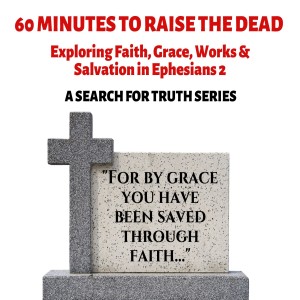
An evangelical sermon has been described as 'thirty minutes to raise the dead.' This, of course, refers to the Bible's description of non-Christians as being 'dead in their sins' (Ephesians 6:1) - in other words, as spiritually dead as a result of having no relationship with God, the giver of all life – and the desire of the preacher for the hearer to find new life in, and through, Jesus Christ. This series, Sixty Minutes to Raise the Dead, comprises 6 talks, each of 10 minutes duration, which explain in turn each of the five major words in a Bible text (Ephesians 2:8-9) that sums up most clearly how it is that a ('dead') person finds new life in Jesus Christ, God's son and our saviour. And hence the title!
Aug 20, 2020
Aug 20, 2020
15 min
An evangelical sermon has been described as 'thirty minutes to raise the dead.' This, of course, refers to the Bible's description of non-Christians as being 'dead in their sins' (Ephesians 6:1) - in other words, as spiritually dead as a result of having no relationship with God, the giver of all life – and the desire of the preacher for the hearer to find new life in, and through, Jesus Christ. This series, Sixty Minutes to Raise the Dead, comprises 6 talks, each of 10 minutes duration, which explain in turn each of the five major words in a Bible text (Ephesians 2:8-9) that sums up most clearly how it is that a ('dead') person finds new life in Jesus Christ, God's son and our saviour. And hence the title!
Aug 13, 2020
Aug 13, 2020
15 min
An evangelical sermon has been described as 'thirty minutes to raise the dead.' This, of course, refers to the Bible's description of non-Christians as being 'dead in their sins' (Ephesians 6:1) - in other words, as spiritually dead as a result of having no relationship with God, the giver of all life – and the desire of the preacher for the hearer to find new life in, and through, Jesus Christ. This series, Sixty Minutes to Raise the Dead, comprises 6 talks, each of 10 minutes duration, which explain in turn each of the five major words in a Bible text (Ephesians 2:8-9) that sums up most clearly how it is that a ('dead') person finds new life in Jesus Christ, God's son and our saviour. And hence the title!
Aug 6, 2020
Aug 6, 2020
15 min
An evangelical sermon has been described as 'thirty minutes to raise the dead.' This, of course, refers to the Bible's description of non-Christians as being 'dead in their sins' (Ephesians 6:1) - in other words, as spiritually dead as a result of having no relationship with God, the giver of all life – and the desire of the preacher for the hearer to find new life in, and through, Jesus Christ. This series, Sixty Minutes to Raise the Dead, comprises 6 talks, each of 10 minutes duration, which explain in turn each of the five major words in a Bible text (Ephesians 2:8-9) that sums up most clearly how it is that a ('dead') person finds new life in Jesus Christ, God's son and our saviour. And hence the title!
Jul 30, 2020
Jul 30, 2020
15 min
An evangelical sermon has been described as 'thirty minutes to raise the dead.' This, of course, refers to the Bible's description of non-Christians as being 'dead in their sins' (Ephesians 6:1) - in other words, as spiritually dead as a result of having no relationship with God, the giver of all life – and the desire of the preacher for the hearer to find new life in, and through, Jesus Christ. This series, Sixty Minutes to Raise the Dead, comprises 6 talks, each of 10 minutes duration, which explain in turn each of the five major words in a Bible text (Ephesians 2:8-9) that sums up most clearly how it is that a ('dead') person finds new life in Jesus Christ, God's son and our saviour. And hence the title!
Jul 23, 2020
Jul 23, 2020
15 min
An evangelical sermon has been described as 'thirty minutes to raise the dead.' This, of course, refers to the Bible's description of non-Christians as being 'dead in their sins' (Ephesians 6:1) - in other words, as spiritually dead as a result of having no relationship with God, the giver of all life – and the desire of the preacher for the hearer to find new life in, and through, Jesus Christ. This series, Sixty Minutes to Raise the Dead, comprises 6 talks, each of 10 minutes duration, which explain in turn each of the five major words in a Bible text (Ephesians 2:8-9) that sums up most clearly how it is that a ('dead') person finds new life in Jesus Christ, God's son and our saviour. And hence the title!
Jul 16, 2020
Jul 16, 2020
15 min
Issues of personal and collective identity seem everywhere today. Is gender fluid? Can a person self-define their gender? How should a person conflicted about their gender be counseled? When do a people have the right to self-determination? What makes a nation? In this absorbing series, Brian Johnston looks at identity from a biblical perspective - who does God say we are as humans, and what does he want our identity to be as Christians, both individually and collectively?
Jul 9, 2020
Jul 9, 2020
15 min
Issues of personal and collective identity seem everywhere today. Is gender fluid? Can a person self-define their gender? How should a person conflicted about their gender be counseled? When do a people have the right to self-determination? What makes a nation? In this absorbing series, Brian Johnston looks at identity from a biblical perspective - who does God say we are as humans, and what does he want our identity to be as Christians, both individually and collectively?
Jul 2, 2020
Jul 2, 2020
15 min
Issues of personal and collective identity seem everywhere today. Is gender fluid? Can a person self-define their gender? How should a person conflicted about their gender be counseled? When do a people have the right to self-determination? What makes a nation? In this absorbing series, Brian Johnston looks at identity from a biblical perspective - who does God say we are as humans, and what does he want our identity to be as Christians, both individually and collectively?
Jun 25, 2020
Jun 25, 2020
15 min
Issues of personal and collective identity seem everywhere today. Is gender fluid? Can a person self-define their gender? How should a person conflicted about their gender be counseled? When do a people have the right to self-determination? What makes a nation? In this absorbing series, Brian Johnston looks at identity from a biblical perspective - who does God say we are as humans, and what does he want our identity to be as Christians, both individually and collectively?
Jun 18, 2020
Jun 18, 2020
15 min
Issues of personal and collective identity seem everywhere today. Is gender fluid? Can a person self-define their gender? How should a person conflicted about their gender be counseled? When do a people have the right to self-determination? What makes a nation? In this absorbing series, Brian Johnston looks at identity from a biblical perspective - who does God say we are as humans, and what does he want our identity to be as Christians, both individually and collectively?
Jun 11, 2020
Jun 11, 2020
15 min
Issues of personal and collective identity seem everywhere today. Is gender fluid? Can a person self-define their gender? How should a person conflicted about their gender be counseled? When do a people have the right to self-determination? What makes a nation? In this absorbing series, Brian Johnston looks at identity from a biblical perspective - who does God say we are as humans, and what does he want our identity to be as Christians, both individually and collectively?
Jun 4, 2020
Jun 4, 2020
15 min
Issues of personal and collective identity seem everywhere today. Is gender fluid? Can a person self-define their gender? How should a person conflicted about their gender be counseled? When do a people have the right to self-determination? What makes a nation? In this absorbing series, Brian Johnston looks at identity from a biblical perspective - who does God say we are as humans, and what does he want our identity to be as Christians, both individually and collectively?
May 28, 2020
May 28, 2020
15 min
Issues of personal and collective identity seem everywhere today. Is gender fluid? Can a person self-define their gender? How should a person conflicted about their gender be counseled? When do a people have the right to self-determination? What makes a nation? In this absorbing series, Brian Johnston looks at identity from a biblical perspective - who does God say we are as humans, and what does he want our identity to be as Christians, both individually and collectively?
May 21, 2020
May 21, 2020
15 min
Issues of personal and collective identity seem everywhere today. Is gender fluid? Can a person self-define their gender? How should a person conflicted about their gender be counseled? When do a people have the right to self-determination? What makes a nation? In this absorbing series, Brian Johnston looks at identity from a biblical perspective - who does God say we are as humans, and what does he want our identity to be as Christians, both individually and collectively?
May 14, 2020
May 14, 2020
15 min
Issues of personal and collective identity seem everywhere today. Is gender fluid? Can a person self-define their gender? How should a person conflicted about their gender be counseled? When do a people have the right to self-determination? What makes a nation? In this absorbing series, Brian Johnston looks at identity from a biblical perspective - who does God say we are as humans, and what does he want our identity to be as Christians, both individually and collectively?
May 7, 2020
May 7, 2020
15 min
Issues of personal and collective identity seem everywhere today. Is gender fluid? Can a person self-define their gender? How should a person conflicted about their gender be counseled? When do a people have the right to self-determination? What makes a nation? In this absorbing series, Brian Johnston looks at identity from a biblical perspective - who does God say we are as humans, and what does he want our identity to be as Christians, both individually and collectively?
Apr 30, 2020
Apr 30, 2020
15 min
In this short series, Bible teacher Brian Johnston explores four times that the Holy Spirit uses the same Greek word about things that God wants all Christians to be fully convinced about - the inspiration of Scripture, the deity of Christ, the House of God and the Sanctuary worship of God.
Apr 23, 2020
Apr 23, 2020
15 min
In this short series, Bible teacher Brian Johnston explores four times that the Holy Spirit uses the same Greek word about things that God wants all Christians to be fully convinced about - the inspiration of Scripture, the deity of Christ, the House of God and the Sanctuary worship of God.